
Free shipping on all ordersJoin the list for 10% off your first order
Skin

Caring for skin through a Colorado winter

Why high, dry winters are so hard on skin, and a simple routine to keep it soft, supple and comfortable until spring.
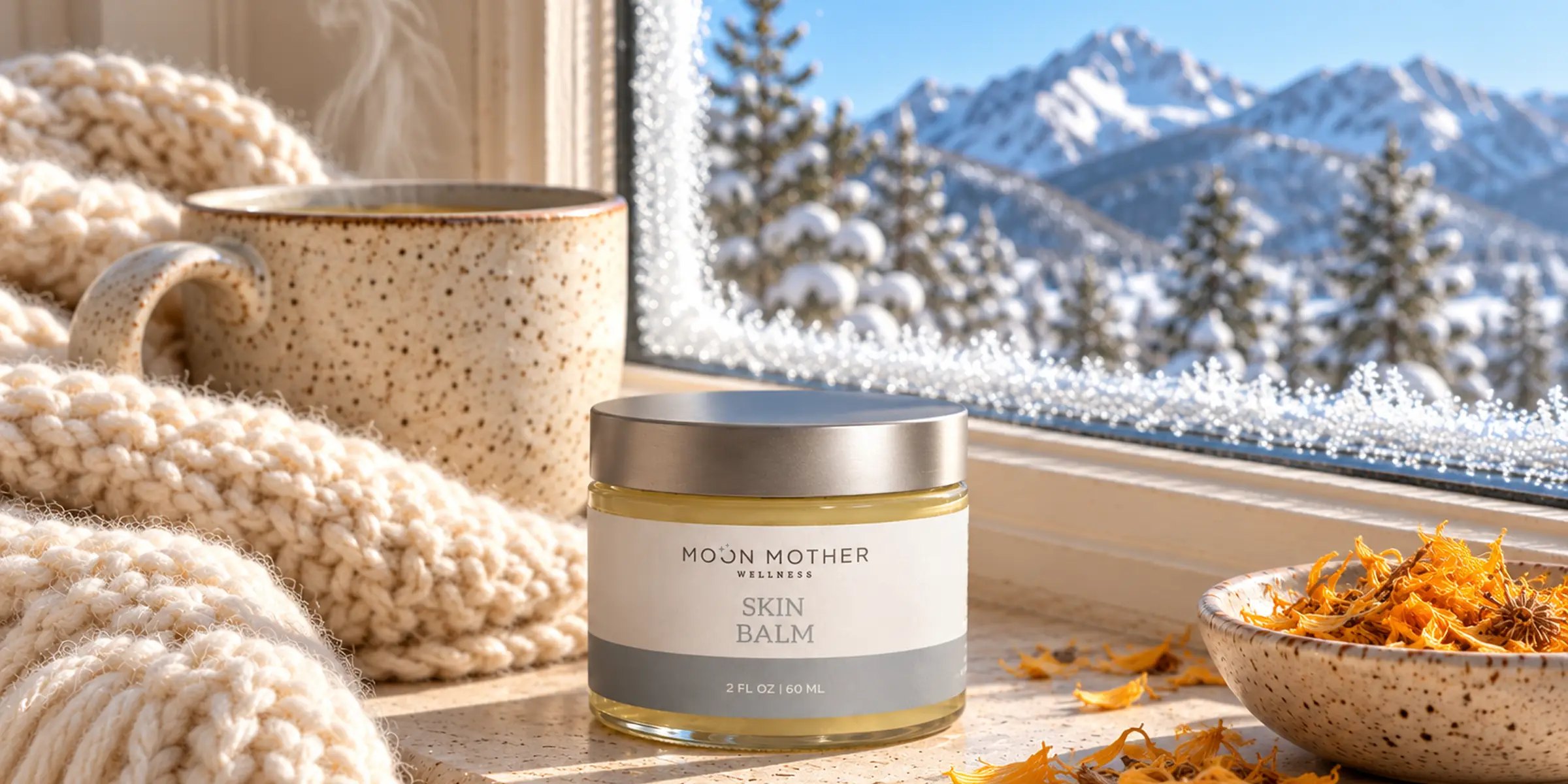
5 min read Moon Mother Wellness Skin Balm on a sunny windowsill beside a wool scarf, a mug of tea and calendula, with snowy mountains outside

Colorado winters are beautiful: bright blue skies, fresh snow, crisp mountain air. They are also among the toughest conditions your skin will face all year. If your hands feel tight by mid-morning, your heels catch on your socks or your lips never quite feel comfortable, you are not imagining it.

The good news is that winter dryness is predictable. Once you understand what is pulling moisture from your skin, it becomes much easier to protect it.

What’s happening to your skin

The outermost layer of your skin works like a brick wall. Skin cells are the bricks, and a blend of natural oils and lipids acts as the mortar that holds them together. When that mortar is intact, it keeps water in and irritants out. This is your skin barrier.

In dry, cold conditions, water evaporates from the skin faster than it can be replaced. The barrier loses moisture, the “mortar” thins, and small gaps form. The result is the familiar tightness, flaking, rough patches and, in more stubborn cases, painful cracks around the knuckles and heels.

Why Colorado winters are especially drying

Low humidity, all year

Colorado is semi-arid even in summer. In winter, cold air holds very little moisture, so the air around you is constantly drawing water from your skin.

Furnace heat indoors

Forced-air heating warms cold outdoor air without adding any moisture back. Indoor humidity can drop well below the comfortable range, so your skin keeps drying out even while you are inside.

Cold, biting wind

Wind strips away the thin layer of warmer, more humid air that sits next to your skin. Exposed areas like cheeks, lips and hands lose moisture quickly, and windburn can leave them red and tender.

Altitude and winter sun

Sun exposure is stronger at elevation, and fresh snow reflects much of the sun’s ultraviolet light back up at you. Winter sun can leave skin both burned and dehydrated.

Quick temperature swings

Moving from icy sidewalks into heated rooms several times a day stresses the skin and can leave it flushed and more reactive.

Hot showers and frequent washing

A long, hot shower feels wonderful in January, but hot water dissolves the skin’s natural oils. Frequent hand washing and hand sanitizer add to the effect.

Wool scarves and sweaters can add friction, and many of us simply drink less water when it is cold outside. Together, these small things add up.

A simple winter skin routine
  • Keep showers short and lukewarmFive to ten minutes in warm, not hot, water is plenty. Choose a gentle, fragrance-free cleanser and pat your skin dry instead of rubbing.
  • Moisturize while skin is still dampThe first few minutes after bathing or washing your hands are the most important. Applying a rich balm to slightly damp skin helps seal that water in before it evaporates.
  • Bring moisture back into your homeA humidifier in the bedroom makes a noticeable difference overnight. Most homes feel best between 30 and 50 percent humidity.
  • Wear sunscreen, even in winterUse a broad-spectrum sunscreen on your face and any exposed skin, especially on bright days, ski days and anytime you are around snow.
  • Cover up against the windGloves, a soft scarf and lip protection are your first line of defense on windy days. Choose soft fabrics next to sensitive skin.
  • Give hands and heels an overnight treatmentBefore bed, apply a generous layer of balm to hands and feet, then slip on cotton gloves or socks. By morning, skin feels noticeably softer.
  • Drink water and eat healthy fatsHydration and foods rich in healthy fats, like avocado, nuts, seeds and olive oil, support your skin from the inside.
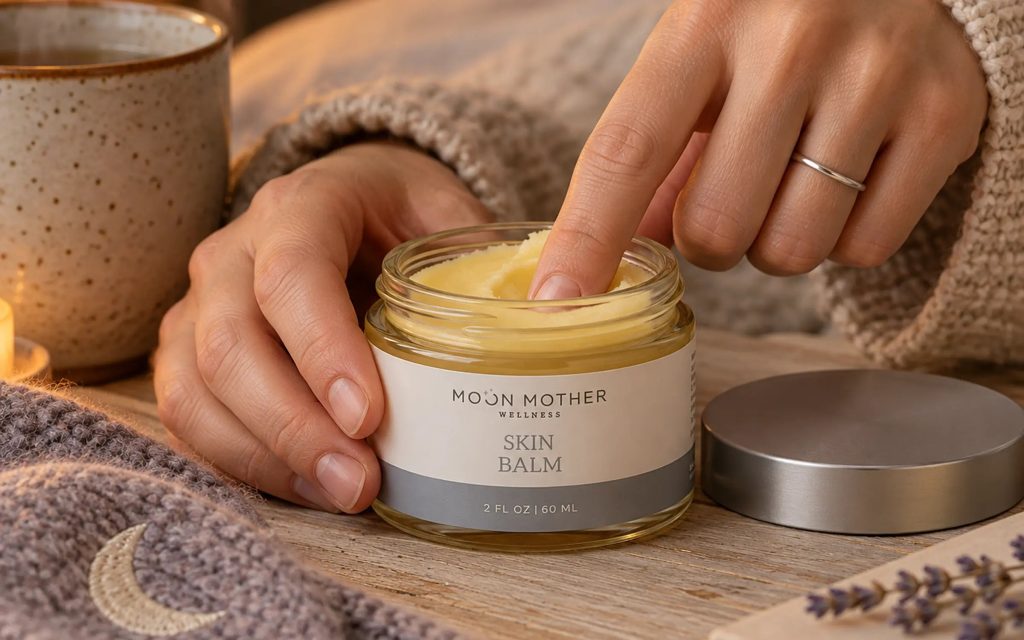
Hands scooping Moon Mother Wellness Skin Balm from an open jar beside a mug of tea, a candle, a cozy knit blanket and lavender

How Skin Balm comforts dry winter skin

When the air is this dry, lotion alone often isn’t enough. Water-based creams can evaporate almost as quickly as they are applied. A balm is different. It is made entirely of oils, butters and wax, so it melts gently into the skin and stays put, forming a soft, breathable layer that helps hold moisture where it belongs.

Skin Balm begins with organic jojoba oil, which closely resembles the natural oils your own skin makes. It sinks in easily and leaves skin feeling supple rather than greasy. Rich organic cocoa butter and mango butter add deep, lasting softness, and a touch of beeswax creates a light protective veil that helps shield against cold air and wind.

Into that base, we slowly infuse four herbs that have been trusted in skin care for generations: golden calendula, humble plantain leaf, velvety comfrey and sunny St. John’s wort. A finish of tea tree and lavender essential oils gives Skin Balm its clean, fresh scent.

Warm a small amount between your fingertips and smooth it over hands, knuckles, elbows, knees and heels. Feel it soften and melt. Within moments, tight, rough skin feels calm, comfortable and cared for. Keep a jar on your nightstand for your evening routine and a tin in your coat pocket for windy days on the trail.

Your winter skin kit
  • ✦  Skin Balm, in a jar at home and a tin on the go
  • ✦  A gentle, fragrance-free cleanser
  • ✦  A bedroom humidifier
  • ✦  Broad-spectrum sunscreen and lip protection
  • ✦  Soft gloves and cotton socks
Shop Skin Balm

When to see a professional

Skin Balm is for external use only and should not be applied to broken skin or open wounds. If you have sensitive skin, try a small amount on your inner arm first. If your skin is cracked and bleeding, very itchy, or isn’t improving with a gentle routine, please check in with a dermatologist or your healthcare provider.

Winter in Colorado doesn’t have to mean months of uncomfortable skin. With a few small habits and a balm made for exactly these conditions, your skin can stay soft and comfortable all season long. See you on the trail.

Back to the Journal